
Dallas knows how to dress up. Walk into a downtown ballroom on a Saturday night in October and you will find guests in floor length gowns and tuxedos who came ready for exactly the kind of evening they were invited to. This city has never needed convincing to go formal, which makes Dallas a great spot for a black tie wedding. What it needs, more often than couples expect, is a clear answer to one question before a single vendor gets booked: what should this night actually feel like?
As wedding planners experienced with high-end, luxury weddings, we’re sharing everything you need to know to plan your dream black tie wedding.
The venue decides more than you think
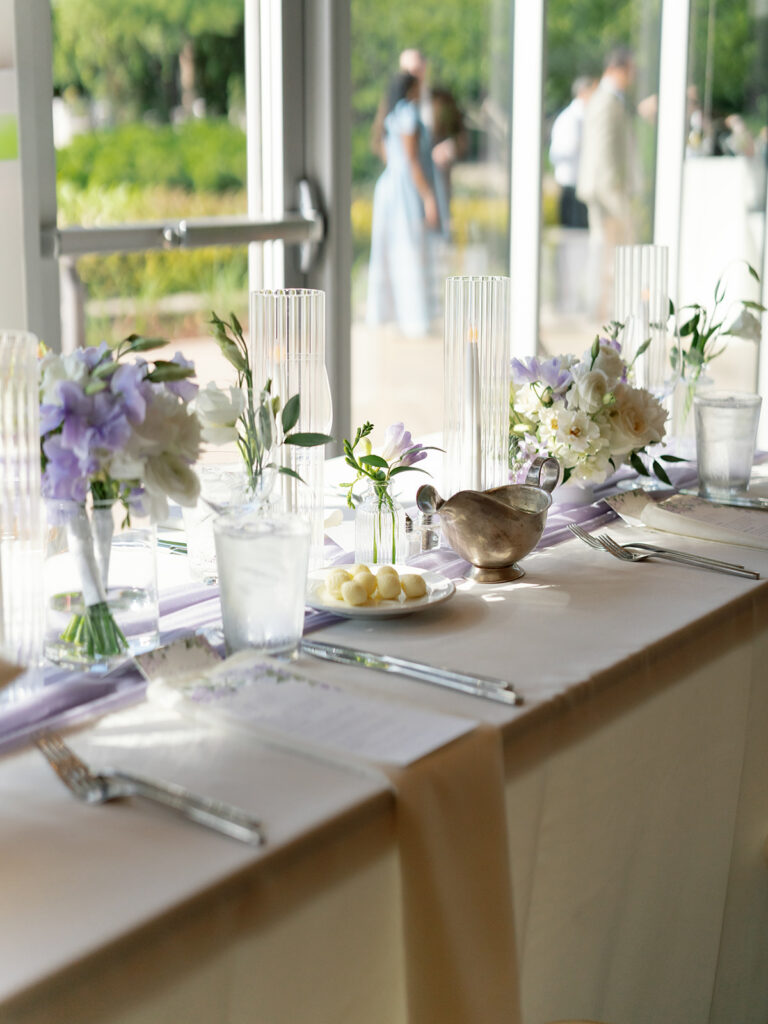
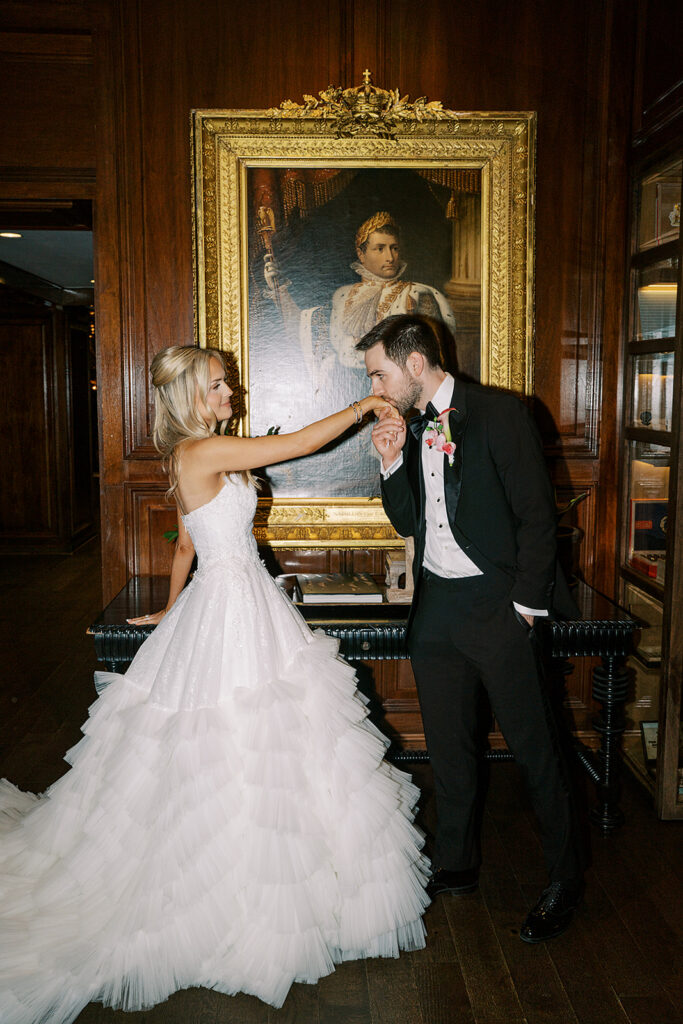
Every formal wedding conversation we have with a couple rarely starts with the flowers or fonts. It starts with the venue because it is all about the room. A venue with real architectural bones, tall ceilings, original woodwork, a staircase that was built to be photographed, gives a black tie evening somewhere to land. A venue that needs to be transformed from the ground up will spend a good portion of your budget just getting it to a neutral starting point, before a single design decision has been made.
Some of the most striking formal weddings we have planned in Dallas happened in spaces that weren’t even on a couple’s shortlist when they first sat down with us. That is usually the real value of bringing a wedding planner in early. Not a list of the same five venues everyone already has saved on Pinterest, but a working knowledge of which rooms in this city actually hold a black tie evening well, and which ones only look like they will in photos.
The details that carry a formal night
Lighting is where a formal wedding either becomes memorable or merely nice. The difference between a reception guests still talk about a year later and one they compliment politely on the way out is almost always the light in the room: candlelight low enough to soften every table, uplighting that respects the architecture instead of competing with it, a single chandelier moment that gives people somewhere to look up. It is one of the few places where investing more consistently changes how a night is remembered.
Florals should tell one story, not three. A ceremony arrangement, a cocktail hour arrangement, and a reception arrangement that do not relate to each other read as separate events stitched together rather than one evening. Through floral design, we help couples create continuity, the same palette and texture carried from the aisle through the last toast, scaling up or down for each moment without ever changing the story.
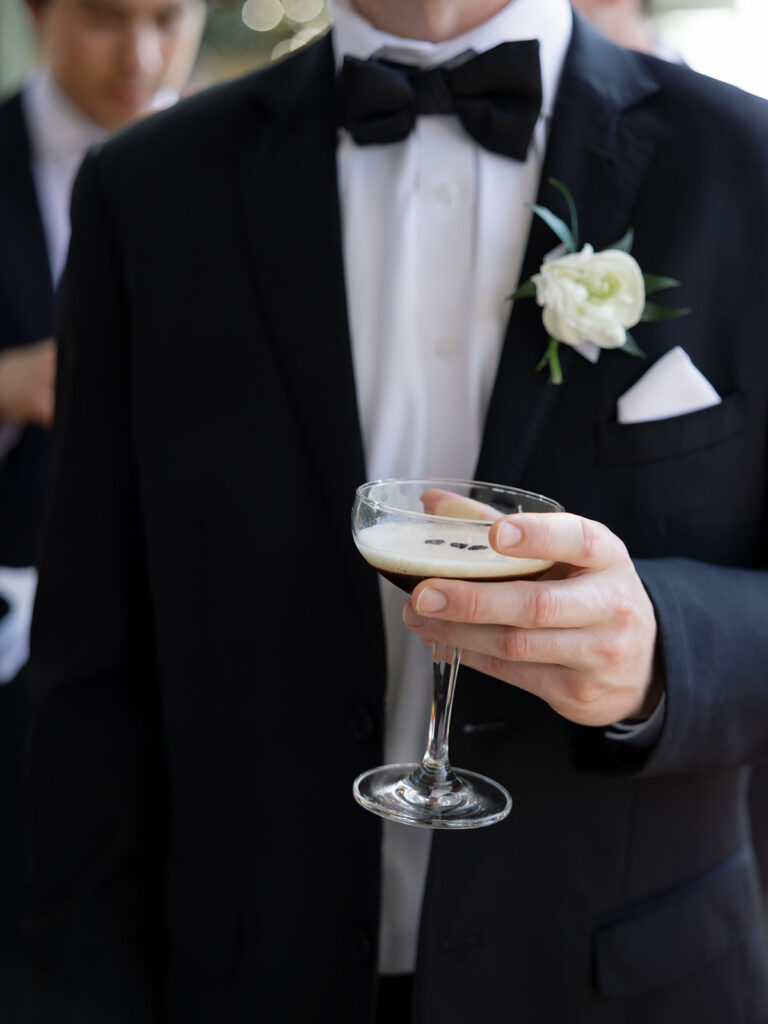
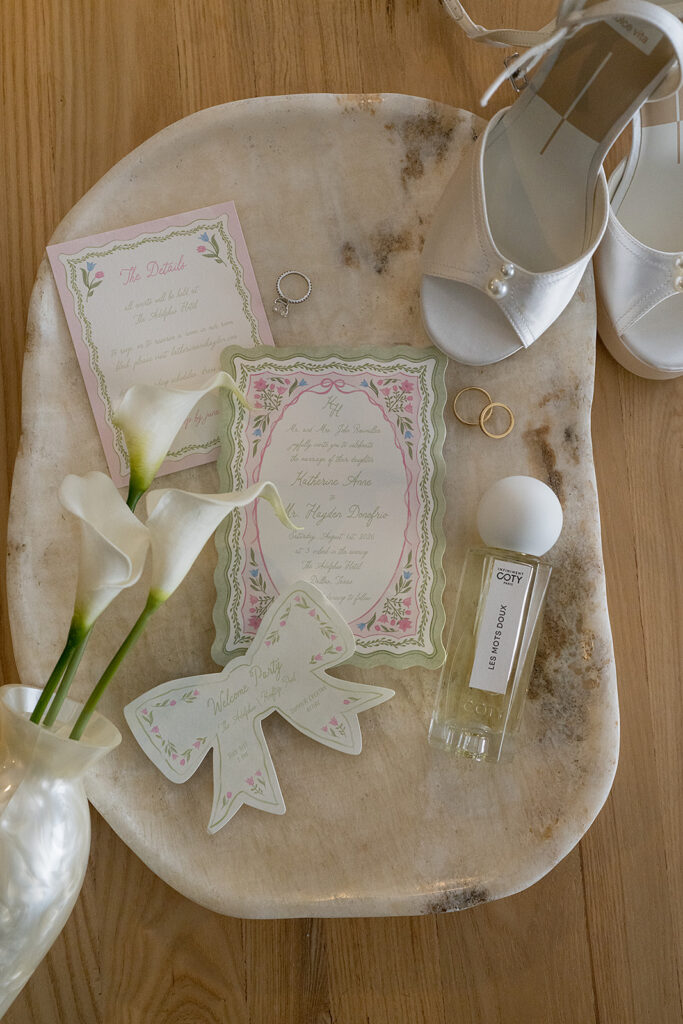
And then there is the part of the night guests actually remember, which has surprisingly little to do with how formal anything looks. It all comes down to the small details. A tray of champagne and something small to eat the moment the ceremony ends. A handwritten note at each place setting. Coffee and something warm waiting near the exit for the guests who stayed until the last song. These are small, specific choices, and they are the ones people mention months later, long after they have forgotten what the centerpieces looked like.
Formal does not mean cold anymore
The black tie weddings we are planning now look different than they did even a few years ago. Couples still want the tuxedos, the florals, the polish of a genuinely formal evening. What has changed is how much warmth gets woven into it: a family tradition worked into the ceremony, a menu built around dishes that actually mean something to the couple instead of the safest option on a catering list, a moment during the reception that has nothing to do with formality and everything to do with who these two people actually are.
Most of the couples we work with are planning this wedding in the middle of an already full life. They are finishing a degree, starting a new job, closing on a house, and the wedding is one important thing among several important things, not the only thing. They are not looking for a night that feels borrowed from someone else’s mood board. And they want their own night, dressed up and unique to them.
Why the planning team matters more at this level
A black tie wedding is more complex to execute than a casual one, even before anything goes wrong. More vendors need to coordinate with each other. Expectations are higher across every category, from the food to the flow of the night. And something unexpected always happens: weather, a vendor running late, a piece of decor that does not arrive the way it was described. What you actually want in that moment is not someone who reassures you it will be fine. You want someone who already knows how to fix it, quietly, before you ever hear about it.
One of our wedding planning couples got married in the middle of a sudden Texas rainstorm. But the couple barely knew it happened because our team handled everything seamlessly for a beautiful event. The bride never had to know what that actually took behind the scenes and stress about it. That is our job to handle for her.
We have spent years learning which venues in Dallas actually hold a formal wedding well, which vendors perform at this level consistently, and how to turn a couple’s vision into an executable plan instead of a checklist. If a black tie wedding is what you are picturing, and you would rather spend your energy enjoying your own engagement than researching all of this yourself, we would love to talk it through with you.
If you’re planning a black tie wedding in Dallas, contact our team of wedding planners so we can help bring your wedding vision to life!